Measuring Proportions: Sight-Size, Thumb Measurement, and Grids
Why measure?
Accurate proportion is often the difference between a convincing study and one that reads uncertain. Measurement methods range from large-scale sight-size setups to quick thumb-derived ratios. Each approach supports different needs: exact replication, fast placement, or compositional balance. This note compares three common techniques and offers simple exercises to integrate them into field practice.
Sight-size
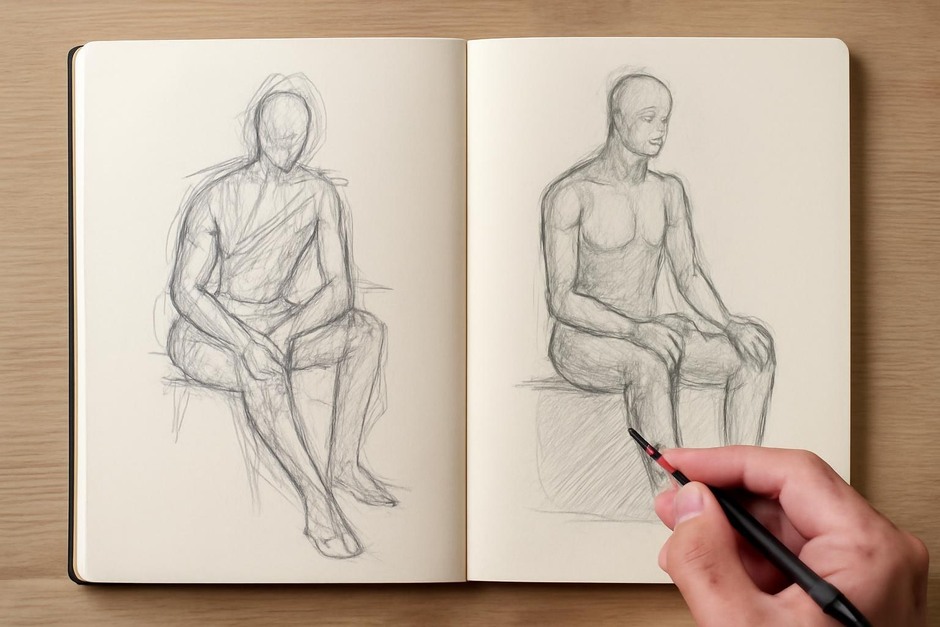
Sight-size is a studio technique that places the subject and the drawing at the same visual scale so the artist can compare directly. It is most often used for figurative work, still life, or architectural elements where a precise match between subject and drawing is desired.
Strengths:
- Very accurate for proportion when set up correctly.
- Direct visual comparison simplifies correction.
Limitations:
- Requires space and a fixed viewing position.
- Less practical in quick fieldwork or crowded locations.
Thumb measurement (pencil sighting)
Thumb measurement is a portable method that uses a pencil or thumb-held tool to measure angles and relative sizes by sighting. It is fast and economical, making it ideal for field sketching where mobility is important.
Strengths:
- Simple and portable, requires only a pencil or a straightedge.
- Good for establishing primary relationships quickly.
Limitations:
- Requires practice to maintain consistent arm extension and viewpoint.
- Less precise than sight-size for fine calibration.
Grids
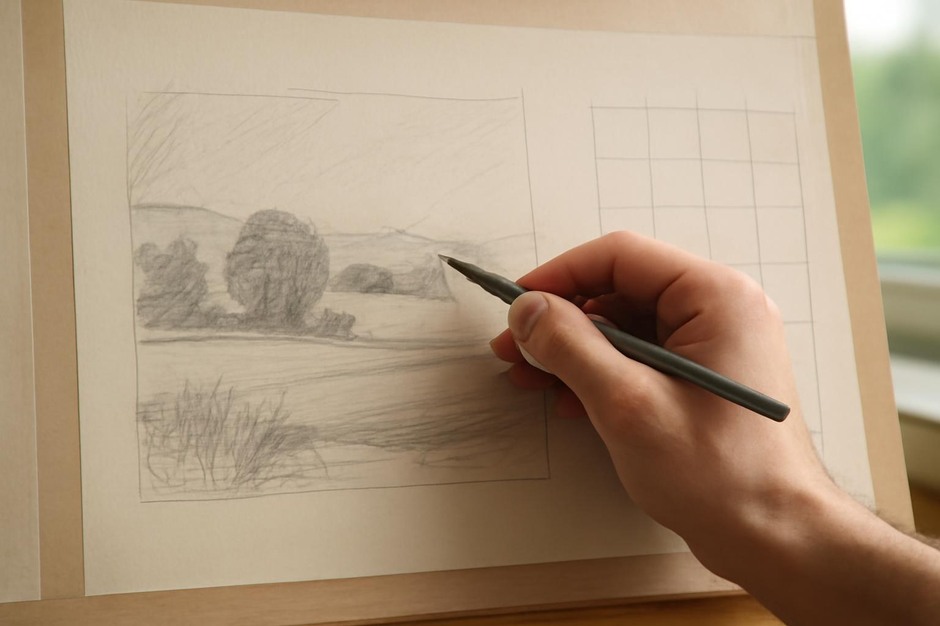
Grids transfer proportions by subdividing the subject and the drawing surface into matching squares or rectangles. Grids are helpful when scaling up or when a precise relocation of elements is needed.
Strengths:
- Scales well from small studies to larger works.
- Helps with complex compositions by isolating smaller decisions.
Limitations:
- Can be slow to set up in the field.
- May interrupt fluid seeing by imposing a mechanical structure on the subject.
Practical exercises
- Consistency drill: Practice thumb measurement for ten minutes on a static subject, then draw the same subject using a quick grid. Compare where proportions shift between methods.
- Sight-size mockup: In the studio, set up a small still life and position your sketch at sight-size. Work for thirty minutes to observe how direct comparison informs corrections.
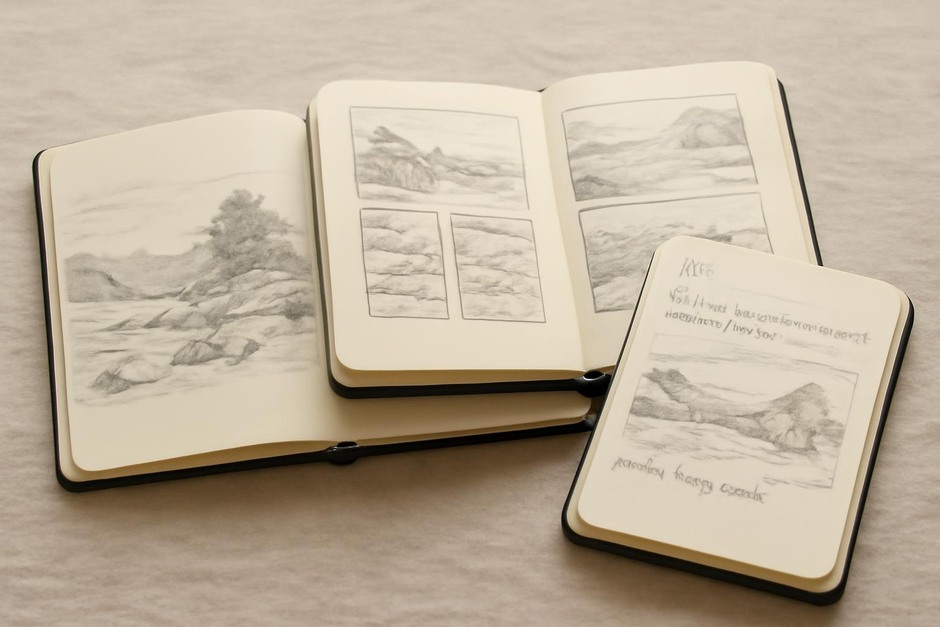
- Scale transfer: Make a small thumbnail, then use a simple two-by-two grid to transfer it to a larger page. Note which details gain or lose clarity in the scaling process.
Choosing a method
Use sight-size when you need a controlled environment and fine accuracy. Choose thumb measurement for mobility and speed in the field. Use grids when transferring or scaling is your priority. Many sketchers use a mix: thumb measurement to block in, a small grid for critical sections, and studio sight-size for final, large-scale work.
Each method shapes what you attend to. Thumb sighting encourages broad relational seeing; grids isolate small areas; sight-size enforces a direct visual comparison. Practice all three and let the situation guide which one you use.